
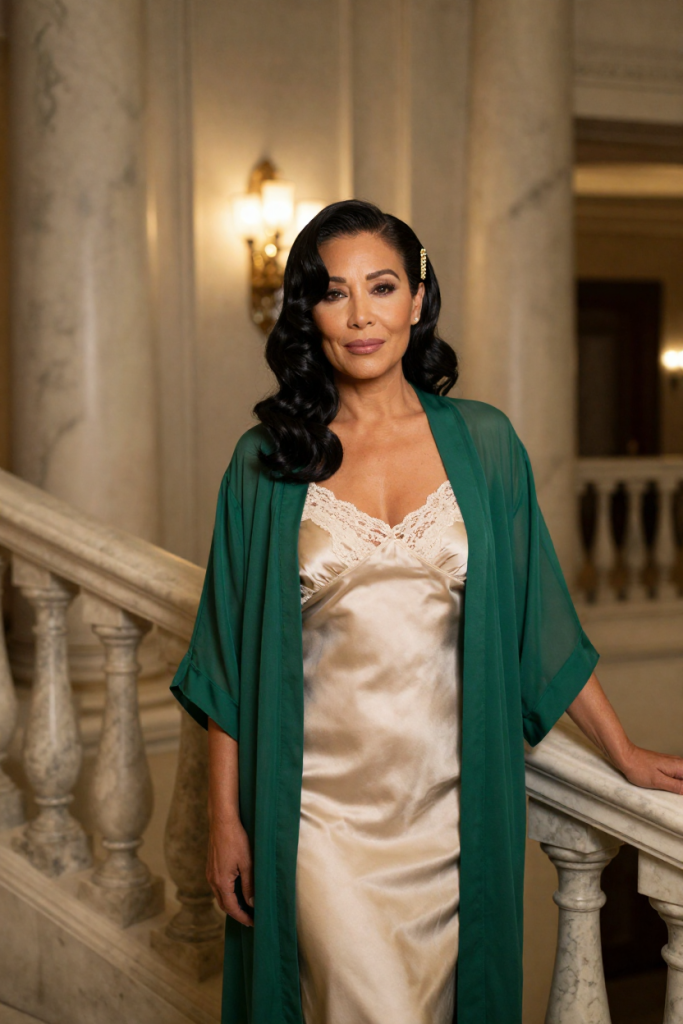
Video tempts makers to skip the judging they would never skip on a still. The clip moves, the movement flatters it, and the finishing credits are spent before anyone has asked the plain question: does she stay herself for the whole duration? An upscaler raises resolution, not fidelity. If the likeness drifts at second three, the grand hall will only present the drift more clearly. Watch the whole screening first, at working size, where a failed judgement costs nothing.
Three viewings, three questions
First viewing — the character. Watch at full speed with the guest card beside the screen. Hair, face and signature should hold through the movement, not just in the first frame the still supplied. Most drift arrives mid-turn, when the model is busiest inventing.
Second viewing — the joins. Hands entering and leaving frame, hair crossing the face, fabric edges against the background, the moment light changes. Transfers and animations strain exactly at joins, so the joins are where an honest judgement is taken.
Third viewing — the loop point. If the clip will loop, watch the seam five times in a row. A gesture that reads cleanly once can stutter at the join, and the seam is the part a viewer’s eye learns fastest.
Then, and only then, enlarge it
A clip that holds its likeness across all three viewings has earned the finishing rooms: a face held by the video swap where casting drifted, or the video upscaler at the destination’s size for a paid tier. A clip that fails goes back to the still — because in this house the still is where character is decided, at 6 credits, and motion is only ever a pass over a portrait that already pleased. That ordering, kept consistently, is the whole cost discipline of video: judge cheap, finish dear, never the other way round. Write the three judgements down beside the clip, even when they pass, because the notes from a clip that nearly failed are the brief for the next one.